
AI
Every field note tagged ai, grounded in shipped builds. See what we build, the delivered-build ledger, or the full Insights hub.

AI for Demand Forecasting: A Practical Guide for 2026
AI demand forecasting beats spreadsheets when data is ready and the forecast reaches a decision. What works, where it fails, and how to ship one in weeks.

How Much Does It Cost to Build an AI Agent?
AI agent costs in 2026 run from ~$5k for a single-task agent to $180k+ for autonomous multi-agent systems. What drives the number, and the run-cost catch.

How to Choose an AI Development Company: 7 Questions to Ask Before You Hire
Most AI vendors sell decks; a few ship software. The seven questions that separate builders from deck-makers before you sign: from who codes to who owns it.

What Is a Supply-Chain Control Tower? (And When You Actually Need One)
A supply-chain control tower is a single live view that turns scattered signals into decisions. What it is, what it is not, and the cheaper first build.

What Is Agentic AI? A Business Leader's Guide for 2026
Agentic AI is software that pursues a goal by deciding its own next steps, not following a script. How it differs from chatbots, where it pays off, and risks.
How Long Does It Take to Build an AI System?
Most AI builds take 8 to 12 weeks; Finzarc ships a first production version in about three weeks. What sets the timeline, and what 'three weeks' really means.

How Much Does It Cost to Build a Custom AI System?
AI build costs in 2026 run from ~$8k for a simple automation to $150k+ for multi-agent systems. What drives the number, and how Finzarc prices to the metric.

How Predictive Analytics Improves Inventory and Demand Planning, and Where Most Implementations Fail
Predictive analytics for inventory and demand planning works; implementations fail. The difference is never the algorithm.

Real-Time Analytics vs Traditional BI: Which One Does Your Business Actually Need?
Real-time analytics vs traditional BI: a decision rule for the most expensive data-architecture choice you'll make.

AI and Analytics in Enterprises: What Works in Production
AI and analytics in production: eighteen delivered systems, and what actually survives contact with a real business.

Where AI Actually Improves Revenue in Retail and FMCG
AI improves revenue in retail and FMCG through pricing, forecasting, and allocation, not chatbots. The unglamorous places the money hides.

How to Reduce Decision Latency in Large Organizations
Decision latency is the gap between signal and action, where large organizations quietly lose. How to find the delay and close the loop.

Business Intelligence That Drives Decisions: A Complete 2026 Guide
Business intelligence that drives decisions: build BI that changes what happens on Monday, not just what gets reported on Friday.
Scaling LLM Applications Without Breaking Compliance
Scaling LLM applications without breaking compliance: govern data, prompts, outputs and logs at the boundary, not after the audit fails.
How to Reduce GPU Costs in Enterprise AI Systems
Cut GPU costs in enterprise AI by fixing idle utilization, right-sizing models, and taming inference: most of the bill is architecture, not hardware.

AI Infrastructure Mistakes That Kill ROI: What 2026 Research Shows
AI infrastructure mistakes that kill ROI: over-building, starved data, and idle GPUs. What 2026 research says decides whether AI ever pays back.

Human-in-the-Loop vs Full Autonomy: Where Control Should Sit
Human-in-the-loop vs full autonomy: autonomy is a per-decision dial set by error cost and reversibility, not one switch. Where control should sit.

How AI Agents Learn in Production Environments
AI agents don't retrain in production. The system around them does. The real learning loop: traces, evals, human corrections, guardrails.

The Real Reasons Enterprise Automation Fails
Enterprise automation fails on exceptions, ownership, and the last 10%, rarely the tech. What actually breaks, and how to build past it.

Why Traditional Automation Breaks at Scale
Traditional automation breaks at scale because scale is made of exceptions, not volume: why rule-based bots stall, and what to build instead.

How to Choose Between AI Agents and Automation?
AI agents vs automation: a practical decision framework for when a rule is enough and when an agent actually earns its cost.

How to Turn Production Data Into Daily Actions in Manufacturing (Not Monthly Reports)
Turn production data into daily action in manufacturing: wire plant signals to owned tasks and shift-level loops, not monthly reports.
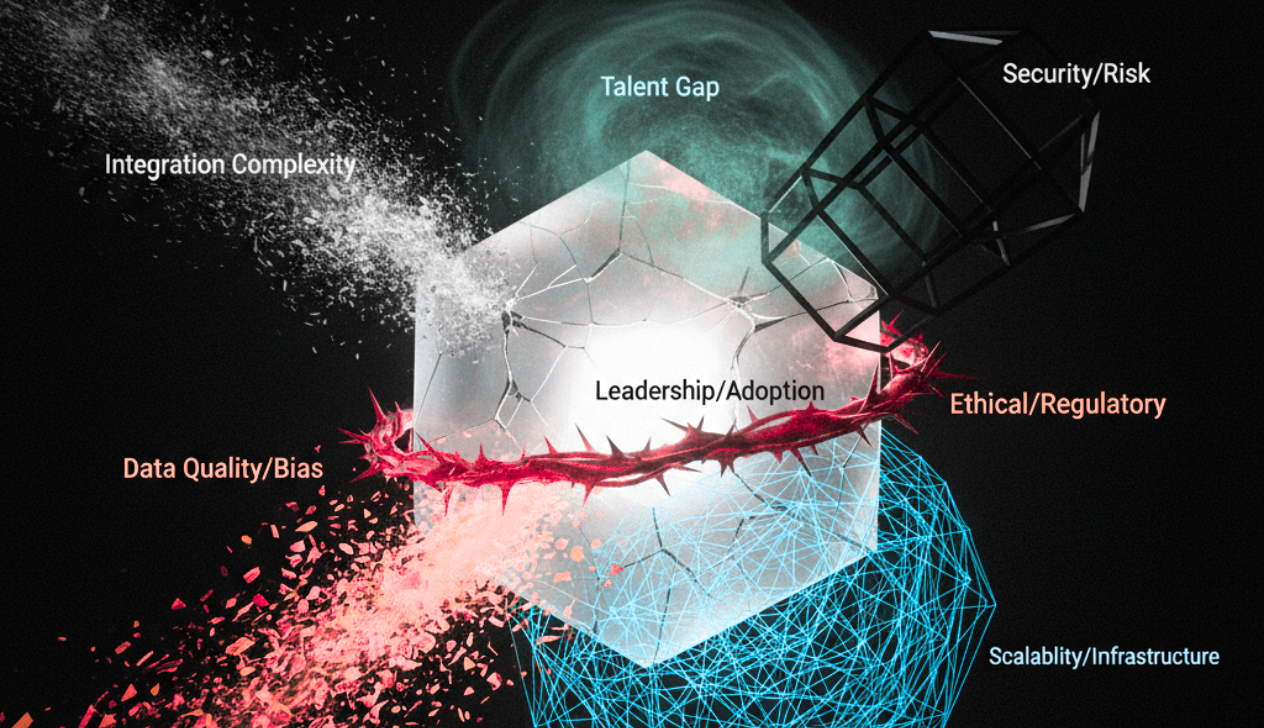
6 AI Adoption Challenges Leaders Can’t Ignore in 2026
AI adoption challenges in 2026: the six walls (talent, trust, data, integration, governance, ROI) that stall enterprise AI, and how to clear them.

Why FMCG and Retail Leaders Are Still Watching AI Instead of Letting It Act
FMCG and retail AI keeps watching instead of acting. The real blockers, and how bounded autonomy earns AI the right to act on the floor.

Where AI Pilots Quietly Fail Inside Organizations
Why AI pilots fail inside organizations: not in the demo, but in the handoffs, ownership gaps, and steering committees where they quietly dissolve.
Vendor Shortlisting in 2026: A Practical Checklist for Teams That Care About Execution
AI vendor shortlisting in 2026: a practical checklist to tell builders from deck-makers before you sign anything.

Execution Speed Is Becoming the Real AI Advantage
Execution speed is the real AI advantage in 2026: models commoditized, shipping didn't. Fast production loops out-compound any model edge.

3 AI Breakthroughs Reshaping How Every Industry Operates in 2025
AI breakthroughs 2025: agents that act, reasoning models, and collapsing inference cost: the three shifts rewriting how industries operate.
Autonomous AI Agents: Navigating Innovation, Ethics, and Human Collaboration
Autonomous AI agents: how to balance innovation, ethics, and human oversight without slowing delivery.

Product Sprint 1.0 at BITSoM: Lessons From 600 Teams
With BITSoM, Finzarc hosted Product Sprint 1.0, a national Product Management strategy showdown. 600+ teams registered; six reached the final round.
30 minutes with the founding team. Bring the problem; leave with a scope and a timeline.